Results
NOVEMBER
2025
Screening of tomato populations for salinity tolerance
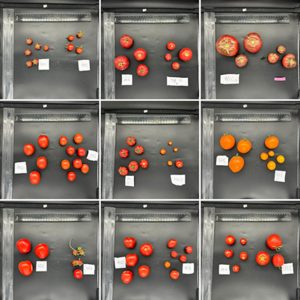
The responses of tomato and pepper populations to salinity stress will be the main focus of the work of the second NatGenCrop PhD student, Michael Wittenberg. The first screening was done on tomato at seedling and fruiting stages and resulted in the identification of several lines with improved salt tolerance. In addition, the generated data will be used to look for genes that influence salinity tolerance in this important crop.
OCTOBER
2025
Experiments with tomato challenged with a phytopathogen have been completed
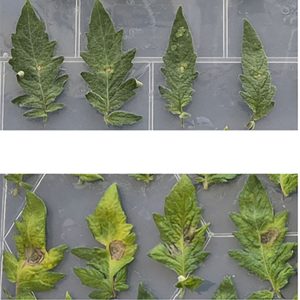
The work with tomato and pepper tolerance to biotic stressors is part of the PhD thesis of Gabrielle Adornato. As a result of the first experiment with tomato treated with phytopathogen Botrytis cinerea, several lines showing weaker symptoms on leaves and fruits have been identified and will be studied further.
OCTOBER
2025
Poster at the 6th Balkan Conference on BioSciences in Plovdiv
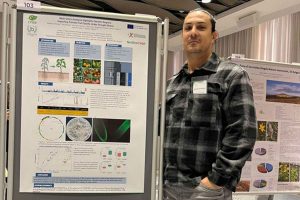
A new poster with updated data on the selection and work with the target gene SlWRKY46 related to drought stress responses in tomato was presented with a poster at the 6th Balkan Conference on BioSciences, 30-31 October 2025, in Plovdiv by Dr. Nikolay Anachkov. [download]
JULY
2025
Enrollment of the second NatGenCrop PhD student
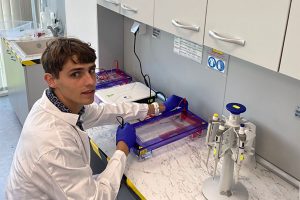
Michael Wittenberg from the University of Cape Town in South Africa became the second NatGenCrop PhD student on 28.07.2025. His dissertation will be on the topic “Genetic Basis of Salinity Tolerance in Tomato and Pepper: Implications for Crop Resilience and Sustainability”.
JUNE
2025
Poster at the 21th EUCARPIA Meeting of the Tomato Group in Plovdiv
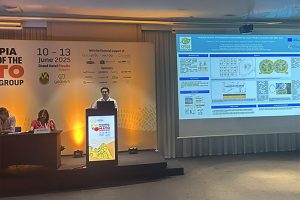
A poster devoted to the identification of target genes related to tomato fruit quality under water stress was presented at the international 21th EUCARPIA Meeting of the Tomato Group, 10-13 June 2025, in Plovdiv by Dr. Nikolay Anachkov. [download]
FEBRUARY
2025
Enrollment of the first NatGenCrop PhD student
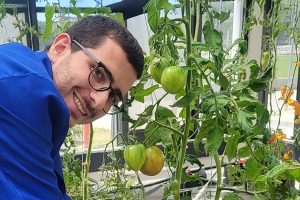
On 18.02.2025 Gabrielle Adornato from Italy became the first NatGenCrop PhD student. His dissertation topic will be “Genome-Wide Association Study (GWAS) Mapping of Horticultural Traits and Disease Resistance Loci in Pepper and Tomato”.
DECEMBER
2024
Tomato lines with increased tolerance to drought have been identified
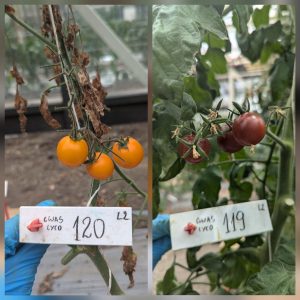
As a result of the greenhouse screenings of tomato and pepper populations and their responses to drought, several lines that consistently show a drought tolerant phenotype were found. In the later stages of the project, they will be characterized in greater details.
SEPTEMBER
2024
A second year of large greenhouse experiments with tomato and pepper
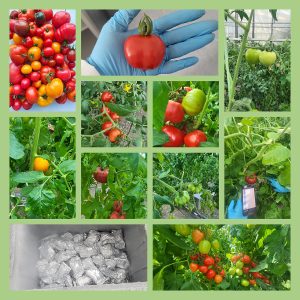
In 2024, the NatGenCrop team repeated the greenhouse characterization of the GWAS and BIL tomato populations in order to collect data on their physiological and biochemical traits under control and water-limited conditions. This was used to verify the results from 2023 and improve the robustness of the data.
APRIL
2024
Functional studies on selected genes of interest have been initiated
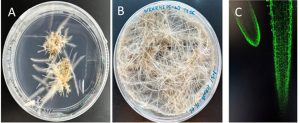
Different molecular biology strategies were employed for the functional validation of genes with the highest potential to modulate stress signaling and secondary metabolism, and regulate important agronomical traits during drought.
DECEMBER
2023
Candidate genes associated with traits of interest were selected for further studies.
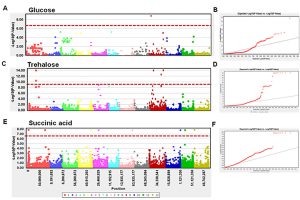
As a result of a GWAS study on tomato fruits, lists of 10 candidate genes associated with fruit quality, shape and yield traits and 19 other candidate genes linked to primary metabolite traits under low water stress were prepared. The second list includes genes potentially associated with the amounts of important metabolites such as glucose, arginine, histidine, raffinose, glycine, and others.
SEPTEMBER
2023
The NatGenCrop team cultivated hundreds of tomato and pepper varieties for analysis
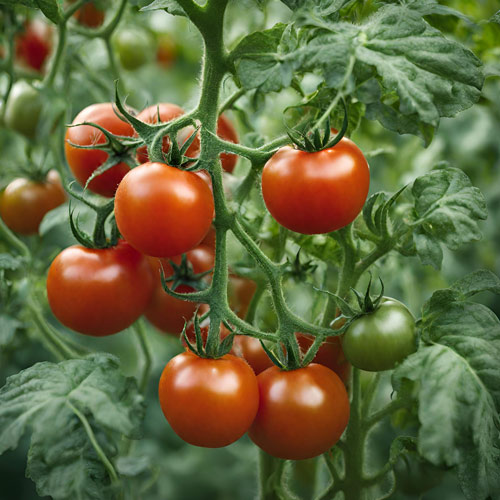
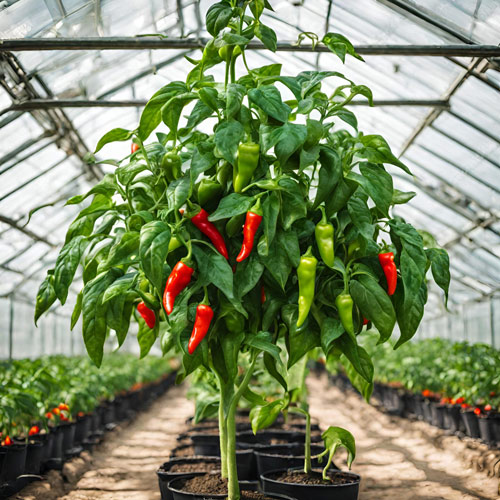
- The NatGenCrop team cultivated hundreds of tomato and pepper varieties for analysis, both in greenhouses and experimental fields. One panel of genotypes, intended for genome-wide association studies (GWAS), included 180 pepper and 152 tomato lines. In addition, 2 BILs populations (backcrossed inbred lines), comprising 56 tomato lines and 110 pepper lines, were also grown and analyzed in the greenhouse.
OCTOBER
2023
Detailed phenotypic analysis of the plants was carried out
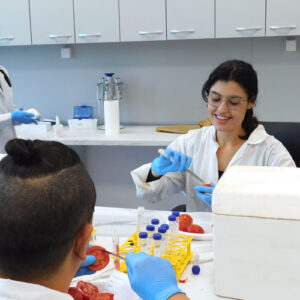
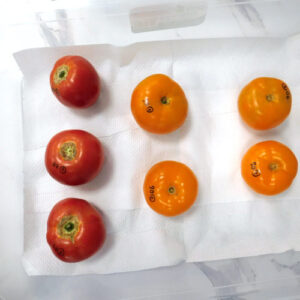
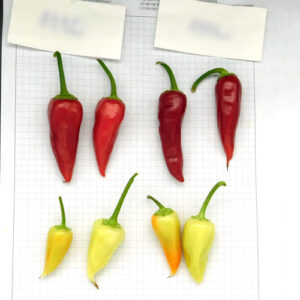
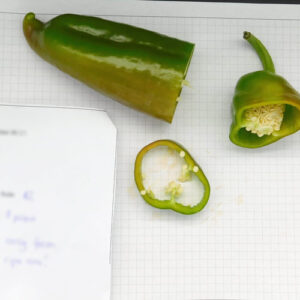
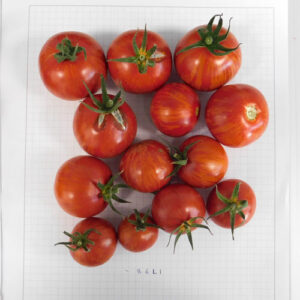
- Detailed phenotypic analysis of the plants was carried out in terms of height, diameter, stem thickness, flowering time, weight, yield and fruit size. Other notable traits, such as presence of top rot and other diseases, were also analyzed. Leaves were sampled for metabolic and elemental analysis at the flowering and fruiting stages. Fruit samples were collected as well.
JUNE
2023
Human capacity development of department “Crop Quantitative Genetics” at CPSBB

- By the middle of 2023, the core members of the NatGenCrop team, led by Dr. Saleh Alseekh, have already been selected and the work on the experiments for the first year of the project has been initiated.
